
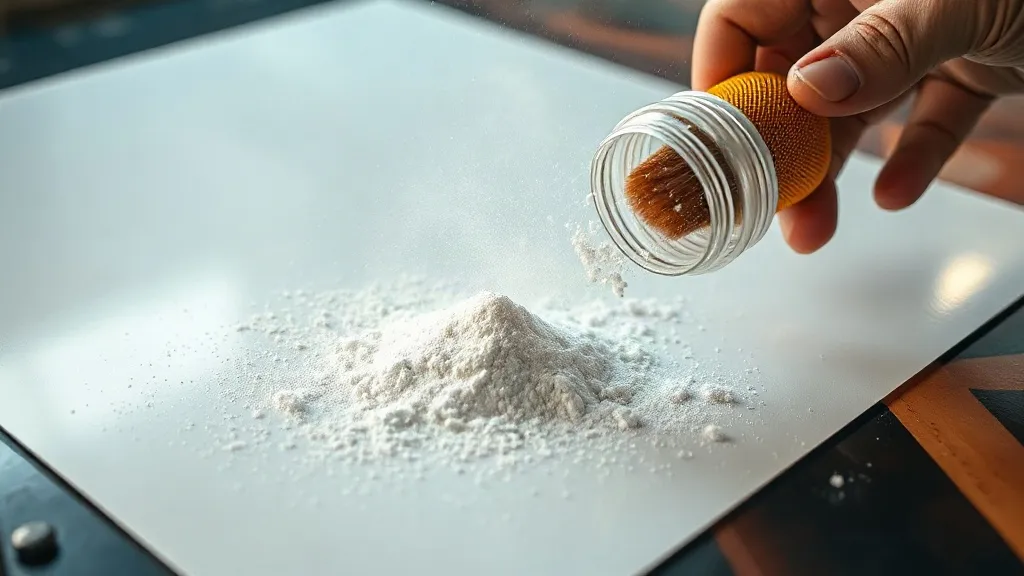
Most conversations about dtf transfers start with the printer or the film. The powder gets a shrug, a quick shake over the wet ink, and a pass through the oven. That shrug is where a lot of good prints quietly fall apart. Adhesive powder is the layer that bonds pigment to fabric, and it is the reason a transfer either stretches with a jersey knit or cracks across the chest after three washes. If you run a small shop, understanding this one material will fix more complaints than any printer upgrade.
This piece is about that step specifically: what the powder actually does, how the main types differ, and how to adjust your process when a job calls for something other than the default.
What the powder is doing in a DTF print
When your printer lays down white ink and color onto the PET film, the ink is still wet and fragile. You dust adhesive powder over the wet white layer, shake off the excess, and cure it. The powder melts into a continuous thermoplastic film that sits on top of the printed design. During pressing, that film softens again and grabs the fibers of the garment.
So the powder performs two jobs at once. It gives the print a handleable, non-tacky surface so you can stack and store transfers, and it becomes the glue that holds everything to the shirt. Get the melt point or the coverage wrong and you get a print that either peels at the corners or feels like a plastic patch.
One detail worth internalizing: the powder only bonds to the white ink layer. If your white underbase is thin or has pinholes, the adhesive has nothing to grab, and the transfer will fail in exactly those spots. Powder problems are often white ink problems wearing a disguise.
The main adhesive types and where each belongs
Suppliers generally sell powder in a few families. Names vary between brands, so read the technical data sheet rather than trusting a label, but the categories are consistent.
Standard thermoplastic polyurethane powder
This is the everyday workhorse. It cures at moderate temperatures, bonds well to cotton and cotton blends, and gives a soft hand. Most shops can run it as their default for t-shirts, hoodies, and tote bags. Its weakness is heat sensitivity: press too hot or too long and the adhesive can bleed past the print edge, leaving a faint halo on light garments.
Low-melt powder
Low-melt adhesives activate at lower press temperatures, which matters for heat-sensitive fabrics like some polyesters, nylon, and anything with elastane. They also reduce the risk of scorching. The tradeoff is storage: low-melt powder can clump in a warm room, so keep it sealed and away from direct sun.
High-elasticity powder
For stretchy garments, an elastic adhesive stretches with the fabric instead of resisting it. If you print for sportswear, swimwear, or fitted performance tees, this is the powder that prevents the cracking-at-the-seams complaint. It costs more per kilo, which is why many shops keep it for specific jobs rather than everything.
Fine versus coarse particle size
Particle size affects detail. Fine powder settles into small text and thin lines cleanly and gives a smoother surface, but it can be harder to shake off evenly and tends to get airborne. Coarse powder is easier to handle and cheaper, but on delicate designs it can leave visible grain and a slightly rougher feel. Many shops keep one of each: fine for detailed artwork, coarse for bold block designs and large fills.
Shaking, curing, and the mistakes that cost you
The application step looks trivial and is easy to rush. A few habits separate clean results from inconsistent ones.
- Shake while the white ink is still wet. If it skins over, the powder will not embed and you get patchy adhesion.
- Use a gentle, even motion and then tap or brush off the excess. A thick blanket of powder cures into a stiff, heavy film that feels bad on the garment.
- Cure to the powder manufacturer's spec, not to a guessed temperature. Under-cured adhesive stays tacky and blocks in the stack; over-cured adhesive loses elasticity.
- Check the film before storing. Any shiny, un-powdered patches mean the white layer was too dry or too thin.
Humidity deserves a mention. In a damp room, powder absorbs moisture and starts to clump in the container and on the film. A simple sealed tub and a dry storage shelf prevent a surprising number of defects.
Matching powder to fabric, not to habit
The most useful shift for a small shop is to stop treating one powder as universal. Build a simple decision rule tied to the garment.
Cotton and heavy cotton blends are forgiving and take standard powder well. Polyester and poly-blends need lower activation temperatures to avoid dye migration and scorching, so low-melt adhesive plus a lower press temperature is the safer route. Stretch fabrics want elasticity in the adhesive and a press cycle that does not over-compress the fibers. Delicate or thin fabrics benefit from fine powder and a lighter coating so the print stays soft.
If a customer brings in garments you have not printed before, run a test transfer on an offcut or an inside hem. Press it, stretch it, and wash it once. That ten-minute test tells you more than any spec sheet, and it protects you from a full-order failure. This is also where sourcing matters: if you are comparing dtf transfers near me options or buying powder locally, ask what adhesive type you are getting and whether the data sheet lists activation temperature. A supplier who cannot answer that is a risk on stretch jobs.
Storage, shelf life, and reusing what you have
Powder is not perishable in the way ink is, but it is not immortal either. Keep it in a sealed container, away from heat and humidity, and it will serve you for a long time. Clumped powder can often be revived by drying it out, but do not press your luck on a paid order.
Finished transfers have their own storage rules. Cure them fully, keep them flat or loosely rolled with the printed side protected, and store them away from heat. A transfer that sat in a hot car or a sunny window may press poorly even if the powder was perfect when you made it.
It also pays to label your powder containers by type and date. In a busy shop, unlabeled tubs turn into guesswork, and guesswork is how a low-melt job ends up on a cotton hoodie at the wrong temperature.
When a print fails, check the powder first
Peeling corners, cracking across the chest, a stiff plastic feel, or a faint ghost outline around the design all point to the adhesive layer before anything else. Before you blame the printer, look at coverage, cure temperature, and whether the powder matched the fabric. Most of these issues are fixable with a process tweak rather than new equipment.
For shops building a reliable dtf workflow, the powder decision is small but consequential. Treat it as a material choice, not an afterthought, and your prints will hold up the way customers expect.
Frequently asked questions
Can I use one DTF powder for every garment?
You can, and many shops do, but you will hit limits on stretch fabrics and heat-sensitive polyester. A standard powder covers cotton and blends well. Adding a low-melt or high-elasticity option for specific jobs removes most of the failure cases.
Why does my transfer feel stiff after pressing?
Usually too much powder or an over-long press. A thick adhesive layer cures into a heavy film. Shake off excess more thoroughly, cure to spec, and check that your press time is not longer than the powder requires.
How do I know the powder is fully cured?
The surface should be dry and non-tacky, with no shiny wet patches. If transfers stick together in the stack, the adhesive is under-cured. Follow the powder supplier's temperature and time rather than guessing from the film's appearance alone.
Does powder particle size really change the print?
Yes, especially on fine detail. Fine powder holds small text and thin lines more cleanly and gives a smoother surface. Coarse powder is easier to handle and cheaper but can look grainy on delicate artwork.
Can old or clumpy powder still be used?
Sometimes, if it is only damp. Spread it thinly and let it dry in a warm, dry space, then break up the clumps. For paid orders, use fresh powder rather than risk uneven adhesion.