
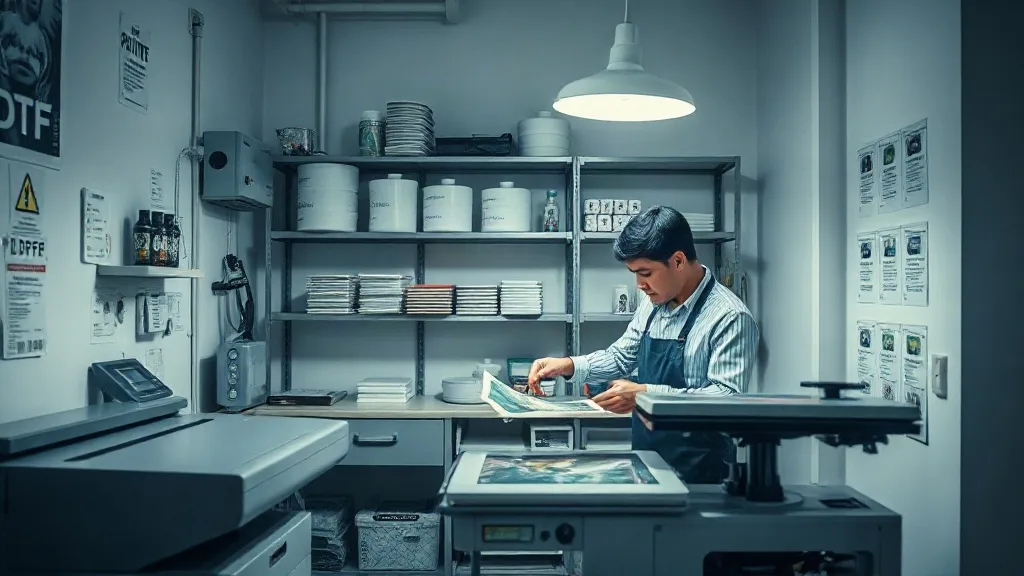
Most DTF shops don't hit a wall because their press is too small. They hit a wall because the way they work stops matching the volume coming in. Orders pile up, gang sheets get wasted, the same file gets re-ripped three times, and suddenly a busy week feels like a crisis. If you've been running a dtf transfers operation for a while and you're starting to feel that friction, this guide is for you. We're going to walk through what actually changes when you scale, where the hidden bottlenecks live, and how to build a workflow that grows with you instead of fighting you.
Why scaling a DTF shop is not just about buying a bigger press
It's tempting to think that doubling your output is a matter of adding equipment. In practice, the press is rarely the limiting factor. A single well-maintained printer and a heat press can turn out a surprising number of transfers per day if the work is organized. What breaks first is usually the space around the press: where film is stored, where powder is applied, where prints cure, and where finished transfers wait to be packed.
The second thing that breaks is decision-making. When you're small, you can make every call on the fly. When you're doing three times the volume, those on-the-fly calls turn into inconsistencies that cost money. Two operators pressing the same job should get the same result, and that only happens when the process is written down and the tools are set up to support it.
The three bottlenecks that show up first
1. File prep and gang sheet layout
Every minute spent re-ripping or re-laying out a file is a minute you're not printing. As order count climbs, the temptation is to just throw files onto a sheet and hope for the best. That works until you're wasting a third of a sheet on every job because no one took five minutes to nest the artwork properly. A simple rule helps: no job goes to print until the sheet layout is checked by a second person or against a checklist. It sounds slow. It's faster than reprinting.
2. Powder application and curing
Powder is one of the easiest places to lose money without noticing. Over-powdering feels safe, but it adds weight, can cause a rougher hand feel, and wastes material. Under-powdering shows up later as adhesion problems. The fix is to standardize the shake-and-cure step: same motion, same timing, same curing temperature, every time. If you have multiple people on the floor, a small laminated card at the powder station with the exact steps removes a lot of variation.
3. Pressing and peeling
Pressing is where dtf transfers either shine or fail, and it's also where operators tend to improvise. One person presses at 320°F for 12 seconds, another at 340°F for 8, and both swear their method works. The problem is that neither can reproduce the other's result, and when a customer complains, no one can trace what happened. Pick a press setting that works for your blanks and stick to it. Write it down. Check it weekly with a test print.
Building a workflow that survives a busy week
The goal of a scalable workflow is simple: every job should move through the same stages in the same order, with a clear handoff at each step. Here's a sequence that holds up as volume grows.
- Intake and file check. Every order gets logged with a job number, and the file is checked for resolution, color mode, and size before it enters the queue.
- Gang sheet layout. Jobs are grouped by due date and material, not by when they arrived. This keeps sheets full and waste low.
- Print, powder, cure. These three steps happen as one continuous block so film doesn't sit half-finished.
- Press and peel. Press settings are fixed and posted. Peel method (hot or cold) is determined by the film, not by operator preference.
- Quality check and pack. A quick visual check for cracking, missing powder, or color shifts before the transfer goes into the bag.
None of this is glamorous. But it's the difference between a shop that can absorb a 50% increase in orders and one that collapses under it.
Pricing and margins when volume goes up
Here's a trap that catches a lot of growing shops: as volume increases, material costs per unit go down slightly, and it's easy to start quoting lower prices to win bigger jobs. That works until you realize your labor hours per job haven't dropped at all. In fact, they may have gone up because of rework and coordination.
The fix is to price on time, not just on materials. Track how long a typical gang sheet takes from file check to packed transfer. Once you know that number, you can see whether a new job is actually profitable or just busy. A simple spreadsheet with columns for material cost, labor minutes, and overhead allocation is enough to start. You don't need software. You need honesty about where the hours go.
Space and storage: the quiet constraint
Film, powder, and finished transfers all need a home, and the space they need grows faster than you expect. A few practical rules help:
- Store film flat and away from humidity. Damp film prints poorly and powders unevenly.
- Keep powder in sealed containers, labeled with the date opened. Old powder clumps and applies unevenly.
- Finished transfers should be stored flat or in a hanging file, not stacked in a pile where they can curl or stick.
- Reserve a staging area for jobs that are pressed but not yet packed. It keeps the press area clear and makes it obvious when something is waiting.
If you're running out of space, the answer is rarely more shelving. It's usually tighter batching: print what you can press the same day, and press what you can pack the same day.
When to bring in help (and how to train them)
The first hire in a DTF shop is usually a press operator, and the temptation is to hire someone experienced and let them run. That works if they already know your settings. If they don't, they'll bring their own habits, and you'll spend weeks chasing inconsistencies.
A better approach is to hire for reliability and train the specifics yourself. A new operator should spend their first day on the powder station and the packing bench, learning what a good transfer looks like before they ever touch the press. Once they can spot a bad powder job or a curled film, they're ready to press. Pair them with a written checklist and a weekly quality review, and you'll get consistency much faster than you would by hoping they figure it out.
What to track as you grow
You don't need a dashboard with twenty metrics. Four numbers will tell you most of what you need to know:
- Waste per sheet. How much film and powder are you throwing away on a typical gang sheet? If it's climbing, layout or powder application is slipping.
- Rework rate. How many jobs come back or need reprinting? Even a small number is worth investigating.
- Time per sheet. From file check to packed. This is the number that tells you whether you can take on more work without hiring.
- Margin per job type. Not every job is equally profitable. Knowing which ones are lets you steer your marketing and your quoting.
Review these weekly, not monthly. Weekly reviews catch problems while they're still small.
Common questions from shop owners scaling up
How many transfers can one person realistically produce in a day?
It depends heavily on sheet size and design complexity, but a single experienced operator handling file prep, printing, powdering, curing, and pressing can typically manage a steady flow of small to medium gang sheets in a normal workday. The bigger constraint is usually drying and curing time, not pressing speed. If you're pushing volume, the first step is often to separate the print-and-cure stage from the press stage so they can run in parallel.
Is it worth buying a second printer before hiring a second person?
Only if the printer is actually the bottleneck. In most small shops, the bottleneck is layout, powdering, or packing. Adding a printer without fixing those steps just means you have more film waiting to be powdered. Measure where jobs actually sit before you spend money on equipment.
How do I keep quality consistent when multiple people are pressing?
Standardize the press settings and post them at each station. Use the same film, the same powder, and the same peel method for each material type. Then do a weekly test press with a known design and compare it to a reference sample. If the test print matches the reference, you're consistent. If it doesn't, you know exactly where to look.
What's the biggest mistake growing shops make with pricing?
Quoting based on material cost alone. Materials are a small part of the total cost once you account for labor, waste, and overhead. A job that looks profitable on paper can lose money if it takes twice as long as expected. Track time per job type and price accordingly, even if it means turning down work that doesn't fit your margins.
How do I find reliable local customers for dtf transfers near me searches?
Local search traffic is often people looking for short-run or same-week transfers, so your listing and your turnaround promise need to match. Keep your hours accurate, respond to inquiries quickly, and make it easy for someone to send a file and get a quote. Word of mouth in local print and apparel groups tends to follow once a few orders go smoothly.
The takeaway
Scaling a DTF shop is less about buying more equipment and more about removing friction from the steps you already have. Standardize the press, tighten the layout, track the four numbers that matter, and train your people on your process rather than theirs. Do that, and growth stops feeling like chaos and starts feeling like a system that can handle whatever the week throws at it.