
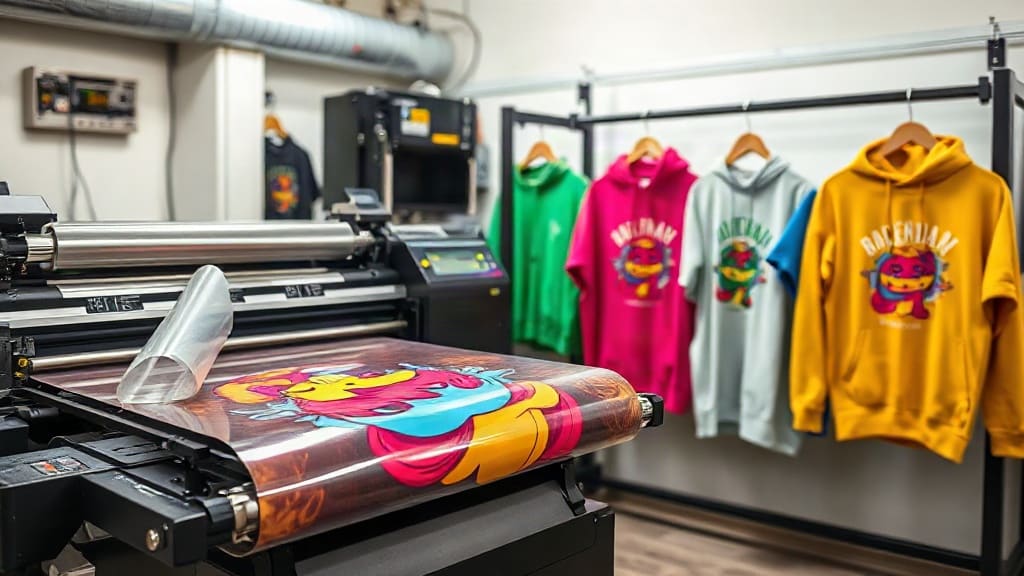
DTF printing has revolutionized the custom apparel industry, offering a versatile and cost-effective way to produce vibrant designs on various fabrics. Whether you're a small business owner or a printing enthusiast, understanding this technology can open new doors. In this guide, we'll dive deep into what DTF is, how it works, and why it might be the perfect solution for your printing needs.
What is DTF Printing?
Direct-to-film printing, commonly known as DTF, is a digital printing method that involves printing a design onto a special PET film, then transferring it to fabric using a heat press and adhesive powder. Unlike traditional screen printing or heat transfer vinyl, DTF allows for high-detail, full-color prints on cotton, polyester, and blends with minimal setup time.
The process begins by printing the design in reverse onto the film using specialized water-based inks. After printing, a hot-melt adhesive powder is applied to the wet ink, which later bonds the design to the fabric when heat and pressure are applied. The result is a soft-feel, stretchable print that can withstand repeated washings.
How Does DTF Compare to Other Printing Methods?
Choosing the right printing method depends on your specific needs. Let's compare DTF with popular alternatives:
- Screen Printing: Ideal for bulk orders with simple designs, but requires costly setup and is not economical for small runs.
- Direct-to-Garment (DTG): Great for detailed prints on cotton, but slower and less effective on dark or synthetic fabrics.
- Heat Transfer Vinyl (HTV): Suitable for simple designs and small quantities, but limited colors and can crack over time.
DTF bridges the gap between quality and versatility. It offers the vibrancy of DTG, the durability of screen printing, and the flexibility to print on diverse materials. Moreover, DTF transfer can be stored for later use, making it perfect for on-demand printing.
Key Advantages of DTF Printing
Why are more businesses switching to DTF? Here are the standout benefits:
- Versatility: Works on cotton, polyester, nylon, denim, and even leather. No pre-treatment required.
- Cost-Effective: Low startup cost compared to screen printing. No screens or expensive equipment needed.
- High Detail: Achieve crisp, vivid images with gradients and fine lines.
- Durability: Prints are stretchable, crack-resistant, and can withstand many washes.
- No Weeding: Unlike HTV, there is no manual weeding of designs, saving time and labor.
- Eco-Friendly Options: Water-based inks are available, reducing environmental impact.
Equipment and Materials Needed for DTF
To start DTF printing, you'll need specific equipment and supplies. Here’s a comprehensive list:
Printer
A DTF printer is essentially a modified inkjet printer that uses CMYK plus white ink. Some popular models include the Epson SureColor F1070 or converted EPSON XP printers. Ensure it has a white ink circulation system to prevent clogging.
Inks
Use high-quality DTF inks that are water-based and formulated for film printing. Proper ink management is crucial to avoid color shifting and adhesion issues.
Films
Choose a PET film specifically designed for DTF. The film must have the right coating to hold the ink and release cleanly during transfer.
Adhesive Powder
Hot-melt adhesive powder, typically made of polyurethane, is essential. It melts during the heat press, creating a strong bond.
Heat Press
A heat press with accurate temperature and pressure control is necessary. You'll need both a roll-to-roll or sheet press for transfers and a clamshell press for application.
Other Tools
Don't forget a drying unit (or use a heat gun), a laminator or powder shaker, and a computer with design software like Adobe Illustrator or CorelDRAW.
Step-by-Step DTF Printing Process
Once you have the equipment, follow these steps to produce your first DTF transfer:
- Create or prepare your design: Use design software to create a mirrored image (if required). Ensure it has proper color management for DTF.
- Print on film: Load the PET film into the printer and print the design using DTF settings. White ink is printed first, then CMYK on top, or vice versa depending on your printer.
- Apply adhesive powder: While the ink is still wet, dust the adhesive powder over the printed design. Ensure even coverage, then shake off excess.
- Dry the powder: Use a heat source (like a tunnel dryer or heat gun) to partially melt the powder, fixing it to the ink.
- Store or use: The transfer can be stored for later use or applied immediately.
- Heat press application: Preheat the fabric to remove moisture. Place the transfer film side up on the garment, cover with a Teflon sheet, and press at about 320°F (160°C) for 15-20 seconds with medium pressure.
- Peel: Allow the transfer to cool slightly, then peel off the film. For best results, use cold or warm peel depending on the powder and film type.
Common Mistakes to Avoid
Even experienced printers can encounter issues. Here are some pitfalls to steer clear of:
- Incorrect temperature: Too low leads to poor adhesion, too high can scorch the fabric.
- Skipping pre-press: Always pre-press your garment to remove moisture and wrinkles.
- Insufficient powder: Ensure uniform coverage, especially on large areas.
- Ignoring humidity: High humidity can affect ink and powder behavior. Maintain a controlled environment.
- Using low-quality materials: Cheap films or inks can result in faded prints or cracking.
Cost Analysis: Is DTF Worth It?
Calculating the cost per print depends on various factors, including ink, film, powder, and electricity. For a standard 10x10 cm design, the material cost is approximately $0.20 - $0.60. In contrast, screen printing becomes cost-effective only after large quantities due to setup fees. DTF is ideal for small to medium runs, making it perfect for print-on-demand businesses.
Moreover, DTF reduces labor costs by eliminating weeding and simplifying the process. Many businesses find that they can lower their per-unit costs while increasing productivity.
Tips for Achieving High-Quality DTF Prints
To get the best results, consider these expert tips:
- Calibrate your printer: Regularly run nozzle checks and clean printheads to ensure consistent ink flow.
- Use ICC profiles: Create or download ICC profiles for your printer, ink, and film combination to achieve accurate colors.
- Test before production: Always do a test print on a sample fabric to check color and adhesion.
- Optimize design resolution: Use high-resolution images (300 DPI) to avoid pixelation.
- Maintain proper powder consistency: Store powder in a dry place and use a shaker for even application.
Applications of DTF Printing
DTF is incredibly versatile, making it suitable for many products:
- Custom t-shirts and hoodies
- Sportswear and athletic uniforms
- Workwear and corporate apparel
- Tote bags and backpacks
- Pet clothing and accessories
- Home textiles like pillow covers and curtains
The ability to print on demanding materials like nylon or polyester without pre-treatment opens up new niches. You can even create custom patches and tags.
Maintenance and Troubleshooting
Regular maintenance will extend the life of your equipment and ensure consistent output. Here are some tips:
Printer Maintenance
Run a cleaning cycle at least once a week to prevent ink drying in the nozzles, especially for white ink. Use high-quality cleaning solution and conduct test prints after maintenance.
Common Issues
- Ink adhesion failure: Check the powder amount and press temperature.
- Color fading: Ensure ink is fresh and profiles are correct.
- Film sticking: This may indicate overheating; reduce time or temperature.
- White ink not opaque: Increase the number of white ink layers or adjust printer settings.
Frequently Asked Questions (FAQ)
Can DTF prints withstand washing?
Yes, when applied correctly, DTF prints are highly durable and can withstand repeated washing. They are designed to be stretchable and resistant to cracking, making them ideal for garments that see frequent use.
Is DTF printing eco-friendly?
DTF printing uses water-based inks, which are more environmentally friendly than plastisol inks used in screen printing. Additionally, the process generates less waste compared to screen printing, as there are no screens to clean with harsh chemicals.
What fabrics are best for DTF?
DTF works well on a wide range of fabrics, including 100% cotton, polyester blends, and even performance fabrics. However, for best results, fabrics with a smooth surface are recommended. Heavily textured materials like fleece may require special attention.
How long does a DTF transfer last in storage?
If stored in a cool, dry place away from direct sunlight, DTF transfers can last for months without degrading. This makes them ideal for printing in batches and applying later.
Can I use a regular inkjet printer for DTF?
No, you need a printer that can handle DTF inks, especially white pigment ink. Standard inkjet printers are not compatible and would clog quickly. There are conversion kits available for some Epson printers, but it's recommended to use a dedicated DTF printer for optimal results.
Final Thoughts on DTF Printing
DTF printing is a game-changer for custom apparel businesses, offering flexibility, affordability, and high-quality results. Whether you're just starting or looking to expand your services, DTF provides a competitive edge. By investing in the right equipment, mastering the process, and avoiding common mistakes, you can produce stunning prints that satisfy your customers.
As technology continues to evolve, DTF is becoming even more accessible, with newer models and refined materials. Embrace this innovation, and you'll likely find it exceeds your expectations. So why wait? Explore DTF printing and transform your printing business today.